
When I first started working in game development about eight years ago, our studio had one person literally one overworked community manager manually reading through thousands of player reviews, forum posts, and support tickets each week. She’d compile everything into a spreadsheet with color coded categories. By Friday afternoon, she’d present a summary that was already partially outdated because players had moved on to complaining about something entirely new.
That’s not sustainable. And honestly, it wasn’t giving us the full picture either.
The Problem With Traditional Feedback Analysis

Player feedback comes at you from everywhere: Steam reviews, app store ratings, Discord servers, Reddit threads, Twitter mentions, in game surveys, customer support emails. A moderately successful game might generate tens of thousands of feedback points monthly. A major release? We’re talking hundreds of thousands or even millions.
The human brain simply cannot process that volume while maintaining objectivity and catching subtle patterns. You miss things. You develop blind spots. Sometimes you fixate on the loudest voices rather than representative trends. I’ve seen teams make significant design changes based on what turned out to be a vocal minority, simply because that’s what bubbled up through manual filtering.
How AI Based Systems Actually Work
Modern player feedback analysis uses natural language processing and machine learning to automatically sort, categorize, and extract insights from massive amounts of unstructured text data. But let me break down what that actually means in practice, not just buzzword bingo.
These systems start by ingesting feedback from multiple sources into a centralized platform. The AI component reads each piece of feedback whether it’s a two word Steam review or a thousand word Reddit essay and identifies several key elements: sentiment (positive, negative, neutral), topics being discussed (gameplay mechanics, graphics, bugs, monetization), intensity of emotion, and even emerging themes that might not fit existing categories.
What impressed me most when we first implemented this at a studio I worked with was the contextual understanding. The system could tell the difference between “this game is sick” (positive) and “I’m sick of this game” (negative). It recognized sarcasm reasonably well. It could understand that “hitbox issues” and “my shots don’t register” were talking about the same underlying problem, even though the wording differed.
Real World Applications I’ve Seen Work
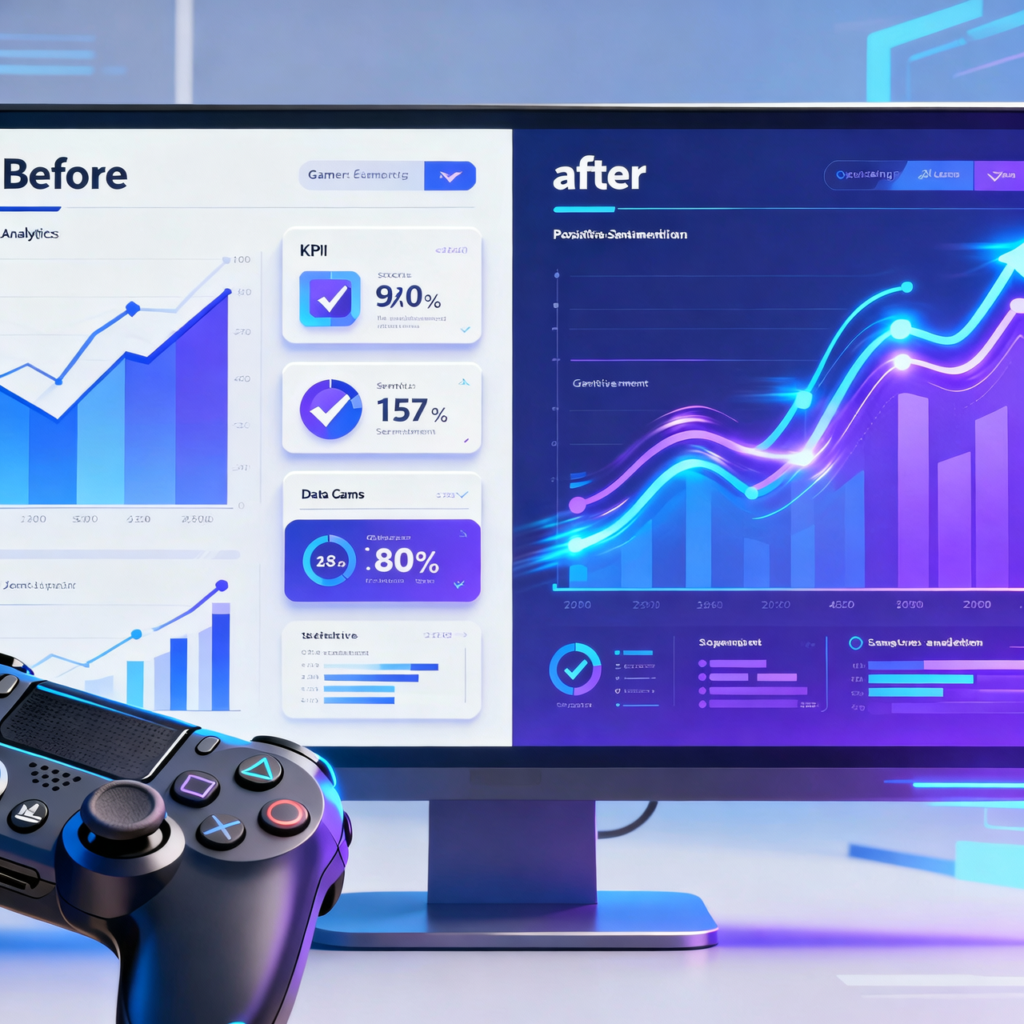
One racing game I consulted on was getting consistently mediocre reviews around 3.2 stars but the team couldn’t pinpoint why. Manual review reading pointed to “physics issues,” but that’s vague. When we ran the feedback through an AI analysis tool, something fascinating emerged: 37% of negative mentions specifically referenced “Tokyo track” and “wall collision.” Turned out there was a specific physics bug on one track where cars would bounce unpredictably off barriers. Once fixed, ratings jumped to 4.1 stars within two weeks.
Another example: A mobile strategy game was seeing declining retention. Traditional metrics showed players dropping off around day five, but why? AI sentiment analysis of in game feedback and app reviews revealed a sharp negative sentiment spike connected to phrases like “paywall” and “impossible without paying” specifically at player level 15 which happened to be around day five for average players. The progression system was strangling free players at that exact chokepoint. The team rebalanced, and retention improved significantly.
The Benefits Are Real, But Not Magic
The biggest advantage is speed. What took our community manager three days now happens in about twenty minutes. That means we can identify and respond to issues before they snowball into full blown controversies.
Second is comprehensiveness. You’re actually analyzing 100% of feedback, not a sample. I’ve found this particularly valuable for catching bugs that only affect specific hardware configurations or regional issues that might only show up in certain languages.
Third and this surprised me is the removal of confirmation bias. Humans naturally gravitate toward feedback that confirms what they already believe. An AI system doesn’t care about your pet feature or your design philosophy. It just tells you what the data says. That objectivity has saved projects I’ve worked on from some really stubborn blind spots.
The Limitations You Need to Know
Here’s where I need to be straight with you: these systems aren’t perfect, and anyone selling them as a complete solution is overselling.
Context still gets lost sometimes. A system might flag “the ending made me cry” as negative sentiment when it’s actually high praise for emotional storytelling. Cultural and language nuances remain challenging what works well for English feedback often struggles with Japanese, Russian, or Portuguese.
You also get the garbage in, garbage out problem. If your feedback channels are dominated by hardcore players, the AI will analyze hardcore player sentiment, which might not represent casual players who churn silently. You need to actively seek diverse feedback sources.
And perhaps most importantly: AI can identify patterns, but it can’t make design decisions. I’ve seen teams blindly follow what “the data says” without understanding the deeper context. When our analysis showed players hating a difficult boss, the knee-jerk reaction was to nerf it. But deeper investigation revealed players loved the challenge they just needed better tutorialization on the mechanics. AI pointed us toward the problem; human judgment solved it correctly.
Implementation Advice From Experience
If you’re considering implementing AI based feedback analysis, start small. Pick one channel maybe Steam reviews or support tickets and run it parallel to your existing process for a month. Compare insights. Build trust in the system.
Make sure someone on your team actually understands how the tool categorizes and weights feedback. These aren’t magic black boxes; they have settings, training data, and assumptions built in. Know what they are.
Also, maintain human oversight. Use AI to surface and prioritize, but have real people read the actual feedback that’s been flagged as important. The nuance matters.
Looking Forward
The technology keeps improving. The newer systems I’m seeing can track sentiment trends over time, predict potential issues before they explode, and even suggest which feedback to prioritize based on player lifetime value and community influence. Some are beginning to integrate voice feedback from streams and videos, which opens entirely new dimensions.
But the core principle remains: AI based analysis is a tool that amplifies human capability, not replaces it. The best results I’ve seen come from teams that pair sophisticated analysis tools with experienced community managers and designers who know how to interpret and act on the insights.
Your players are talking. The question is whether you’re truly listening to all of them, or just the loudest ones.
Frequently Asked Questions
What’s the main advantage of AI feedback analysis over manual review?
Speed and scale. AI can process hundreds of thousands of feedback points in minutes, identifying patterns and trends that would take humans weeks to spot, while covering 100% of feedback instead of a sample.
Does AI completely replace community managers?
No. AI handles the heavy lifting of sorting and pattern recognition, but human judgment is still essential for interpretation, context, decision making, and authentic community engagement.
How accurate is sentiment analysis in practice?
Modern systems typically achieve 80 90% accuracy on straightforward feedback. They struggle more with sarcasm, cultural nuances, and complex emotional contexts that require human review.
What types of games benefit most from this approach?
Any game with substantial player communities and multiple feedback channels particularly live service games, multiplayer titles, and major releases that generate large volumes of reviews and discussion.
What’s the typical cost of implementing these systems?
Solutions range from a few hundred dollars monthly for basic tools to enterprise platforms costing thousands. Many analytics platforms now include feedback analysis features as part of broader packages.